Privacy & Why it Matters in today's hyper-connected world
Privacy is not about hiding wrongdoing, it is about autonomy, consent, and control in a world increasingly built to observe, predict, and influence human behavior. Framing privacy as a criminal concern normalizes surveillance. This article explains why reclaiming privacy is essential for democracy.


The most common argument against leading a private life, and the one that gets on my nerves the most, is "If you've done nothing wrong, you have nothing to hide" or its less common variation "Only criminals have something to hide". Being private and choosing privacy doesn't mean you are hiding something. The ideology of having something to hide puts a person in a passive and defensive position, framing the right to live a private life as a guilty secret.
Choosing privacy means being in control of the data you share publicly. Having control over what you share versus "having something to hide" is a crucial distinction and understanding this difference is essential. Privacy is about autonomy and control. It is the fundamental right to choose what you share with the world, akin to choosing who you let into your home. You wouldn't allow a stranger to listen to your family's conversations, track your movements, and then sell that information to your employer, insurer, or the highest bidder. To the uninitiated, this isn't paranoia; in reality, it is the dominant business model of the digital age. The threat isn't just the Orwell's big brother that is watching you, but also the Kafka's: The trial, where individuals are rendered powerless by opaque bureaucracies that collect and use their data without their knowledge or consent. The real injury is not just being watched, but also being subject to arbitrary, unchallengeable judgements based on profiling data that we can't see or correct.
Normalization Of Surveillance
Physical monitoring was historically used by governments, primarily during wars. Citizens accepted surveillance as a concrete and temporary justification to identify genuine threats. Overtime, this surveillance expanded beyond suspicious individuals, citing espionage, double agents, and internal threats, gradually creeping to include anti-war activists and political dissidents. This blurred the line between targeted surveillance and mass monitoring.
In the 90's, corporations entered the equation and began leveraging Geo-demographic segmentation systems built on anonymized census data. The synthesized data included average income, household size, and racial demographics by zip code into consumer cluster profiles. Marketers used these consumer clusters to introduce targeted advertising, resulting in significantly increased marketing efficiency and revenue by minimizing spending wastage on broad, non-targeted advertising (like generic TV commercials or newspaper ads).
The next to follow up was the data brokerage industry, generating significant economic growth through advanced data collection and marketing optimization. Fueled by advances in computing power and data storage, it transformed personal information into a commodity. This opaque, multi-billion dollar industry specializes in inferring thousands of attributes per individual to create detailed profiles for sale, effectively building the infrastructure for centralized mass surveillance. By the time privacy legislation began to catch up, the industry was already a well-entrenched powerhouse, protected by corporate lobbyists and political allies.
Post-9/11 war on terrorism accelerated the normalization of mass surveillance techniques, such as bulk data collection and widespread monitoring of communications. Scholars described this process as "illiberal drift", where pervasive monitoring is increasingly framed as necessary tool for security, shifting the boundaries of what is publicly acceptable. Evolving technology enabled much wider surveillance of people across thousands of attributes per person, spanning daily behaviour, social interactions, location history, and also psychological patterns. This was a crucial shift from passive data collection to active and continuous monitoring.
From Surveillance To Behavioural Manipulation
Today, governments and corporations exploit this infrastructure far beyond its original justifications.
- Governments use collected data not only for security but also for censorship, election influence, and to shape public opinion through targeted propaganda. Vague and subjective definitions of so-called "suspicious behaviour" enable systemic racial, religious and political profiling, producing permanent records that persist even after the persons are cleared of wrongdoing.
- Corporations treat personal data as a raw material, using it to manipulate consumer behaviour, distort markets, and design addictive systems that erode individual autonomy. The algorithms are not optimized for user well-being, but for the user engagement. This incentive system produces filter bubbles, amplifies outrage, promotes sponsored content and exploits cognitive biases to maximize attention and consumption.
Read about Facebook's role in promoting hate and violence against Rohingya people in Myanmar.
Personalization is, in practice, behavioural engineering.
These algorithmic judgements create a profoundly Kafkaesque reality. Individuals are categorized, scored, and flagged by systems whose logic is proprietary and inscrutable. When an algorithm denies a loan, raises an insurance premium or flags a post as "suspicious", the citizen faces a modern version of Josef K.'s ordeal, a verdict without any clear charge, based on evidence they cannot examine, issued by a faceless authority they cannot confront. This is essence of digital powerlessness.
Privacy As An Essential Pillar Of Democracy
Privacy is not just a personal preference, it is a structural requirement of a functioning democracy.
Privacy enables
- Autonomy and individual freedom allowing people to develop their own beliefs, identities and thoughts free from surveillance, judgement and coercion. This forms the basis to form individual opinions, necessary for informed voting and civic engagement.
- Freedom of association, assembly, freedom of expression and dissent. Democracy relies on its people's ability to organize, protest and build movements without fear of retribution. This means the groups like political parties, activists, trade unions can communicate and assemble without being monitored or targeted by the government or powerful actors. When people know they are being monitored, they are more likely to self-censor. Privacy enables dissent, criticism of the government and open debate, the cornerstones of democratic discourse. Without it, public discourse becomes sanitized and opposition stifled.
- Privacy upholds that citizens are not inherently suspects, mass surveillance treats everyone as a potential threat, creating the culture of suspicion, undermining the trust between the government and people. Privacy also acts as a check on government overreach, limiting the ability to collect personal information that could be used to manipulate, coerce or even persecute political opponents, journalists and activists.
Surveillance enables social control, authoritarian regimes use it not just for security, but to identify dissidents and preempt opposition. This enables the governments to monitor and suppress threats to their power before they materialize and effectively preventing democratic challenges. The awareness of monitoring leads people to be risk-averse to save their own life, job, family and the stability. This nature makes people avoid controversial topics, sensitive searches and contact with activists. Over time, democracy becomes a hollow shell. Gradual erosion of privacy and the expanding governments capacity for control creates a slippery slope towards total authoritarianism. When governments have almost every data regarding an individual, it becomes easier to shape narrative, engineer social outcomes, and manipulate public opinion through targeted propaganda and personalized disinformation, lies, half-truths and deceit.
Look up Stasi and China's social credit system.
The Myth That Privacy Is Already Dead
Beyond the "nothing to hide" argument, two other arguments frequently appear "privacy is dead anyway" and "my phone/Google/Facebook knows me better than myself".
- The "privacy is dead" argument is a self-fulfilling prophecy; a surrender to the very forces that seek to exploit us. While it's true that sharing personal information has become mandatory for using numerous services to maintain a semblance of normalcy, we haven't reached a state of total surveillance. This relentless erosion is not an endpoint; it is a warning. It is a glimpse of the dystopia that awaits if our resistance fails. Accepting it as inevitable, accelerates it.
- I am always amazed at how people say, "My phone knows me better" as a compliment rather than with paranoia. The argument is not a praise to a corporation's innovation but a warning sign of its profound influence over our lives. Such knowledge is not used for individual's interest but to predict, shape and monetize behaviour. It's easy to think we're immune to manipulation, but our social media habits prove otherwise. We are socially conditioned to freely share our personal information. This normalization is so pervasive that governments now incorporate it into policy. For instance, the U.S. government requires international students to provide their social media handles for visa vetting, effectively mandating access to their digital lives, whether or not they consent to that level of scrutiny.
Consequences Of Algorithmic Judgement
Merely lecturing people about privacy is not effective. Most individuals underestimate the vast amount of data collected about them. Data we never consented to and have no control over is actively shaping our entire lives.
Governments and corporations use algorithms and artificial intelligence to analyze thousands of data points per person, often sourced from the extensive profiles assembled by the data brokerage industry. These systems classify, score and flag people at scale. These results are available at the fingertips of human employees. The algorithmic conclusions are binary, right or wrong, though both can lead to serious consequences.
- When the systems get it right, abuse still occurs. Corporate employees or law enforcement officers have used surveillance tools to stalk individuals, access private communications and extort victims.
- When the systems get it wrong, innocent are implicated. There are numerous documented cases where faulty algorithmic judgements have led to wrongful suspicion, lost jobs, denied services, destroyed reputations and even worse.
Governments and corporations are quick to publicly celebrate instances where surveillance leads to reduction in crime, leveraging these successes to legitimize their expanding reach. Yet, when these very same systems fail, leading to the wrongful implication of innocent individuals, ruined lives, or even fatal consequences, accountability vanishes. The blame is strategically shifted, deflected onto vague 'algorithmic errors', or dismissed as an unavoidable cost of technological progress. This stark asymmetry, claiming credit for successes while evading responsibility for failures, reveals a profound and dangerous hypocrisy at the core of the surveillance state.
Did you know that Tesla employees had access to customer vehicle camera recordings? This access led to internal sharing of sensitive footage, including scenes of private moments, embarrassing situations and horrible accidents as meme material for employee's personal entertainment.
The Economic Penalty Of Being Watched
Health and Vehicle insurance has become mandatory in many countries around the world. With the advent of new technologies and methodologies of surveillance, we have "variable / personalized pricing" on the insurance premiums. Health insurers can track your sleep, activity, and even your stress through wearable devices. Car insurers monitor your acceleration, braking, and speed through vehicle sensors.
What happens when your premium goes up because you’ve been sedentary during exam week, or because you had to speed up in an emergency or to help someone? Seems dystopian? These systems are already a reality in some parts of the world.
Employment is similarly affected. People lose job opportunities or fail background screenings due to social media posts, associations, or political views expressed online. These decisions are often opaque, permanent and unchallengeable.
The Overlooked Threat
We spend so much energy worrying about faceless entities that we often miss the tier right below. The small organizations, the casual acquaintances, the weirdly friendly HR person, and the random contacts from a job search. These are the people who don’t need sophisticated tech to hack your life, they already have a lot of information about you or can get it from your social media posts or a talk over a drink. Privacy doesn't only mean digital, it encompasses everyday interactions too.
Many people brag about their lives, luxury purchase, a recent vacation, income and share personal information when a total stranger asks them questions while filming the interaction (think tik-tok's).
Here’s the uncomfortable truth at the heart of today’s privacy:
The most common privacy breach often starts with voluntary sharing.
Think about it. It’s the acquaintance you allowed to follow you after one nice chat. It’s the landlord from a viewing who now has your full name, financial details and your phone number. It’s the friend-of-a-friend who can see your vacation albums because your profile is public. We hand out pieces of our lives like business cards, assuming good intent. But intent can change, and the information that's once released, is impossible to reel back in. The very information that we share could be used against us, be it financial frauds, stolen identities, stalkers. Now-a-days, we also have to contend with people using our images sourced from our social media profiles, feeding them to AI algorithms to create AI slop photos and videos of situations that never happened in real life. It has become more important than ever to safeguard the access to our images to only people we can trust.
How many people you know can correctly guess answers for your security questions of online accounts or banking sites? If the answer is non-zero, then try changing the answers to something else, the answers you put doesn't have to be right. You might have been born in a fictional Star Wars city, attended Hogwarts, gotten married on the moon, owned the DeLorean as your first vehicle, been best friends with Bruce Lee and gone on a date with Emma Watson.
Privacy v/s Convenience
Faced with this dystopian landscape, reclaiming control can feel daunting. However reclaiming privacy doesn't need you to live off-grid. Although tempting, it is neither realistic and not necessary. Modern medical science is vital and the conveniences are too embedded in our everyday lives to live without them. Privacy is not a binary, there's not just 0 and 1, but it is a spectrum of the combinations we can choose, depending upon our preferences and trade-offs. We can begin by:
- Sharing the bare minimum information that is absolutely necessary to create accounts or when signing up for a service. Giving approximate date of birth and not our real date of birth for anything that is not for Official purposes.
- Compartmentalizing online accounts and keeping them separate, not linking them using Google/Meta/Apple, so as to prevent companies building a complete profile of us.
- Using pseudonyms, initials, short names or nicknames and avoiding using full legal names make it harder for people to find all our accounts through a simple name search.
There are other basic measures that provide disproportionate benefits. (All my suggested options are from a personal opinion and use. There can be better ones out there, that may suit your needs better.)
Ad-Blockers
The very first basic thing would be to add an ad-blocker extension to your browser. Ad-blockers (like Ublock Origin) allows you to hide and block the annoying ads and pop-ups to make the websites you visit look clean and actually readable. You might also be surprised to find that the date usage of the site is minimized since the ads and related content is blocked form loading on the page, this also improves the speed of webpages on limited bandwidths.
An alternative would be to use AdNauseam, it hides all ads and popups on the page while quietly clicking on all available ad links. "As online advertising becomes ever more ubiquitous and unsanctioned, AdNauseam works to complete the cycle by automating ad clicks universally and blindly on behalf of its users. Built atop uBlock Origin, AdNauseam quietly clicks on every blocked ad, registering a visit on ad networks' databases. As the collected data gathered shows an omnivorous click-stream, user tracking, targeting and surveillance become futile. - AdNauseam team."
Blocking Ads is NOT piracy!
I was surprised that not everyone knows that using ad-blockers is legal in most countries.
Browsers
There's very little we can do to benefit from more privacy on the first party apps, like email client, banking apps, social media and messaging apps; at least without getting into more advanced tinkering. However, on a desktop PC or a laptop, apps are minimal and most of our time is spent on browsers. So choosing a right browser and setting it up the way we want is essential for it to blend into background and let's us do what we want, browse the web, safely and privately.
- Chrome is a resource hungry browser and ties everything to a google account.
- Egde is comparatively better, however it has its own share of collecting information about the user and sending the data to Microsoft, not to mention the constant popups and annoyances by the Microsoft.
- Safari, not my favorite interface and needlessly complicated for most people, not to mention Apple isn't completely privy to its own share of anti-privacy and anti-consumer practices.
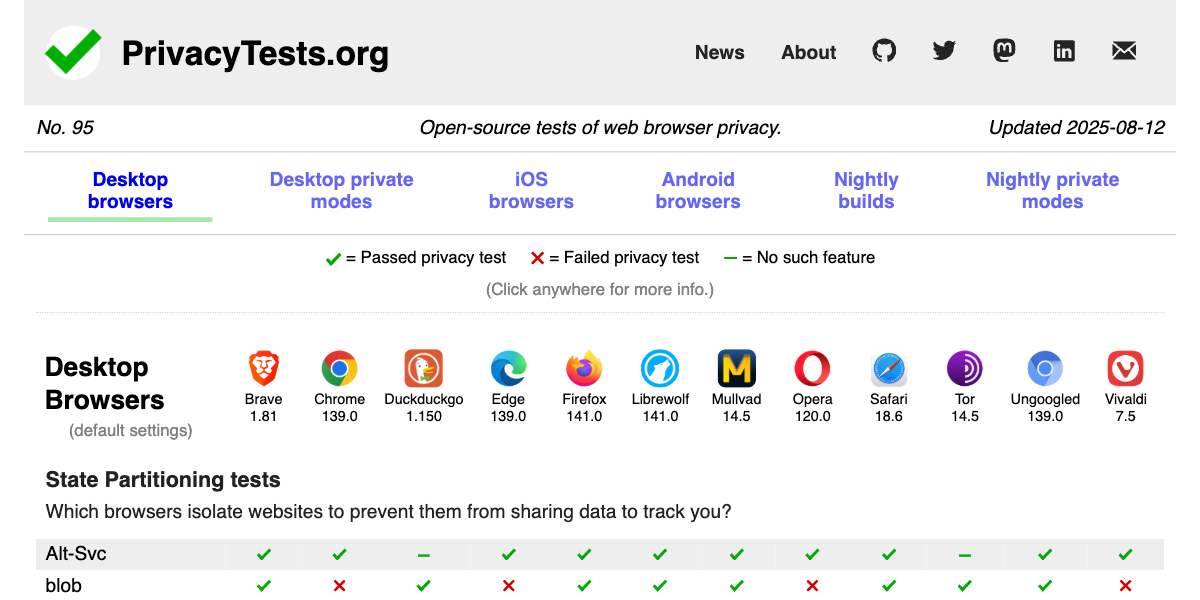
Moving away from these default browsers to more privacy conscious browsers like Brave (An easy recommendation, and privacy focused right our of box, needing minimal setup), Firefox (with extensions & configurations), Librewolf (My browser of choice and a fork of firefox), and Mulvad (My secondary browser) browsers would increase the tracking protection and are more hardened against fingerprinting, malicious actors, and online threats.
Even on a smartphone, we are not obliged to use first-party apps. Most services have a fully functional web versions. By accessing them using a mobile browser with tracking protections and ad-blocking, we can achieve two wins. This prevents cross-site tracking of our browsing habits; and we also deny the apps direct access to our device system files, and personal data (like Apps from Meta).
Search Engines
A search engine acts as a master index for the internet. Imagine it as a intelligent librarian for the entire web, when we type in a query, the librarian scans the library catalog (regularly updated catalog of websites, which the search engine built using crawlers to find the sites that are relevant to the keywords and intent behind our searches), and gives us a ranked list of websites that it thinks are more helpful for our search.
A search engine takes our query and matches it to the most useful answers the internet holds.
A vast majority of users have google as the default search engine. Imagine the librarian as google, it knows what all have you been searching for, groceries, health conditions, job opportunities, political news, hobbies, a place of interest etc., and the librarian google builds a profile of a user, based on his search patterns and behaviors, then sells that information to information brokers, governments, employers, or the highest bidder. Even though the personalized suggestions feel good, this can lead to over-reliance and being bombarded with sponsored products or services, that may not be the best fit for the user.
Unlike mainstream options, privacy-focused search engines like DuckDuckGo, Brave Search, Startpage and Qwant deliver the essential utility of the web search without the surveillance. These provide relevant results without harvesting our personal queries, nor building a profile on us and compromising our privacy.
Personal Communication
It's a common reality of modern life that our personal connections like family and friends are distributed across different cities and time zones. Staying connected with loved ones across distances means relying on digital tools. These private conversations, our secrets, fears and joys are now transmitted online. It is our fundamental right that these intimate exchanges remain truly private, safe from eavesdropping by governments, corporations or malicious actors. Would you want your personal conversations to be weaponized against you, or a private joke made among friends turned into a cause for retaliation? Privacy isn't just a luxury, it is the foundation of trust and freedom in modern life.
Governments worldwide are advancing legislation to mandate backdoors into encrypted communications, effectively ending digital privacy under the banner of fighting crime. This is a flawed approach and criminals would just use more secure forms of messaging on more secure devices and operating systems (An example would be using "signal" messaging app on a graphene OS device). The government's push would result in the law-abiding citizens bearing the burnt of this surveillance, resulting in loss of privacy for the public while having little to no gain in actual crime prevention.
Personal communication encompasses emails, messaging, voice and video calls.
- Email providers like gmail, outlook need our personal mobile number to even create an account. They also scan our emails, track our usage and other tied accounts, and sell this information to the data brokers. Privacy focused email services include Tuta Mail, Proton Mail are great and free recommendations for encrypted emails. There are also private email services like startmail, mailbox, etc., We have aliases options like simplelogin, which enables us to create aliases for an email, which can be shared with specific provider, imagine having a separate email id for each provider but without the complexity of remembering all logins and passwords.
- We use personal messaging more than emails. Whatsapp or imessage is the default for many people across the world. The content of our message may be safe but they also collect information on whom we are talking with, when, and metadata, for whatsapp, it also collects info on IP address, general location. You either trust Apple's closed system and its policies for privacy and protection or tied to data harvesting practices of Meta. Opensource alternative like Signal emerges as a clear winner in enforcing privacy while being secure.
Back Up Solutions
- Encrypted Cloud Services like pCloud, Internxt, Icedrive are direct replacements to Google drive and icloud. They encrypt the files on your device before uploading them. They use zero-knowledge encryption wherein only the user can access the files.
- For photos and videos, a personal favourite of mine is Immich, though it can only be self-hosted. However, if you are not into self-hosting, ente photos is a great alternative and is encrypted while providing features and utilities found on other main stream photo apps.
- If switching to other storage service feels daunting, encrypting your files using tools like Cryptomator or Veracrypt on device and uploading the encrypted file to the cloud service is a good middle ground, ability to continue to use your mainstream storage solution, while adding a privacy layer.
VPN's, Password Managers & Multi Factor Authentications
- The main purpose of VPN's is to access geo-locked content, or to protect ourselves when we connect to public wifi's. Always On VPN connection is also used to prevent apps or websites to access your IP address. Using a secure and private VPN is essential, since all our traffic will be routed through the VPN servers. VPN's like Mulvad are great for complete anonymity while PIA, Surfshark, proton are the next best.
- While "Sign in with Google/Facebook/Apple" is convenient, using a password manager is more private and secure foundation for online accounts. A password manager helps with data minimization (not letting one single company oversee our web activity) and compartmentalization (Keeping online accounts separate and secured by unique credentials). Dedicated apps, browser extensions make it a simple and seamless to login into multiple accounts with unique and hard to crack passwords. The only requirement is to remember a strong master password that unlocks our encrypted vault of complex passwords.
- Multi-Factor authentication has become mandatory for many online accounts and is recommended for more security. Instead of relying on authentication services or apps provided by the big tech like Google or Microsoft, using opensource apps like ente auth, proton auth, and bitwarden minimizes data shared with big tech companies, prevents ecosystem lock-ins, gives back control to user enabling offline backups and end-to-end encryption. Being opensource enables anyone can check the code and prevent any backdoors from ever existing.
Advanced Recommendations:
Alternate Operating Systems
The operating system is the foundational software that controls the device. Today, a duopoly exists in both mobile (ios/android) and desktop (windows/macOS) markets. This concentration of power has created a systemic privacy challenge where user control is deemed secondary to the corporate and government interests.
- There is pervasive telemetry, which is often extensive and non-consensual data collection, built right into the OS for analytics and advertising.
- Government mandates to allow for OS level backdoors and to scan user content, uses spyware like pegasus and proposes laws requiring citizens to install of government surveillance apps.
- Restrictive Ecosystems and Anti competitive behaviour of corporations while limiting user freedom. Apple closed ecosystem now increasingly focused on ad-revenue. Google moving to restrict side-loading on android devices while having the most invasive telemetry and tracking. Microsoft's controversial changes to windows 11 and compelling users to accept due to lack of choice, with increased telemetry, background processes, widgets and Microsoft products and AI integrations that uses more system resources, slowing the system performance and draining the battery life quicker.
- Apple hardware is designed to be non-user repairable creating a consumer lock-in, planned obsolescence and e-waste. The macOS is better in privacy compared to windows, though telemetry and background tracking still exists. (I have very limited experience on mac and majority of applications and services I use are not available on mac.)
These practices create a paradox, while awareness of privacy risks grows, the practical domination of these devices leave users with no viable alternatives. This choice less reality allows the corporations to gradually erode privacy norms knowing that user migration is difficult.
For smartphones, it is worth checking android open source projects, my favourite among them is the graphene OS. It is an android and can be used just as well how we use a normal google based android. For personal computing, any of the popular Linux based distributions will do a better job than windows. After trying a few distributions, I settled on fedora. There are many options for android opensource project and similarly for Linux, there are multitude of Linux distributions, there is something for almost anyone.
If changing the operating system on your device seems daunting, the first thing you can do is to disable all available telemetry on your device. Uninstall the first party apps and install privacy protecting apps or opensource alternatives. Optional, on Smartphones, you can use the device signed out of google or apple account. You can log back in once a week to update apps and on android you can use alternative app stores.
Internet Of Things (IOT) & Smart Home Devices:
For all living beings, home is a sanctuary where life takes root and flourishes. For us, it also has been and will be our private stage for our authentic lives, where intimacy flourishes and masks fall off. Today, the so called smart devices have turned that sacred space into the most revealing surveillance stage, collecting the raw, unfiltered and vulnerable data of our lives from a place we believed was safe and private.
A few examples include smart speakers listening to our intimate conversations, cloud connected security cameras that store everything unencrypted and allow any user to access the raw recording, baby monitors with weak security measures that enable hackers to access, door bell cameras that collect facial data and add them to the databases without consent, smart robo-vaccum devices that 3D maps the user homes, send that information plus other telemetry to the manufacturer and kills itself when the specific IP for telemetry is blocked, smart TV's using automated content recognizing to spy on user behaviour patterns and sell it to advertisers, smart fridges displaying ads on the screens, and don't get me started on modern cars collecting and selling every possible information and location data of users.
The first idea of a smart home was from Georgia Tech, the "Aware Home" was conceived as a sensitive, in-house companion designed to monitor well-being and support independent living, where personal data staying securely within the home and was used for the welfare of the household occupants. It was designed to support health, aging and daily life through context-aware assistance, prioritizing occupants benefit. Then profit motto took over and corporations turned our homes into open portals for data extraction.
For users and enthusiasts of smart home devices, a great alternative would be home assistant. It is an open source alternative and is much more robust, runs locally and is customizable for every need, controlling smart devices, automations etc.,
Self hosting is a great privacy friendly way to unleash a wide range of services and features. Containers of jellyfin, nextcloud, immich, home assistant, frigate, audiobookshelf covers every aspect of media streaming (think Netflix, Spotify), file storage and document tools (think Google Drive + microsoft office 365), photo & video management (think Google Photos, iCloud Photos), smart home ecosystem, object, people and motion analysis using local AI for security cameras, media streaming for audiobooks (think audible). The infinite customization, add-ons and plugins allow to setup everything as per user needs and preferences.
Router:
A router is your bridge between your devices and the wild internet. Though little evidence to suggest privacy intrusion by the router manufacturers, upgrading to an open source OS like OpenWrt or pfSense offers compelling advantages like advanced control over the router functioning and networking, frequent security updates, network wide ad-blocking, threat filtering, and granular parental controls. This creates a layer of protection for every device on the network, ideal for safeguarding children and less tech-savvy users from malicious links and content.
Beyond Personal Privacy - A Societal Battle For Our Digital Future
The tools and measures we use for personal privacy are necessary, but insufficient. They are just our individual responses to a more systemic failure, the mass erosion of privacy that enables societal manipulation, chills free speech, and shifts power away from the people. The very people who can hold the government responsible and impeach the government if necessary are being treated with suspicion and are being constantly monitored. We must look up from our individual devices to confront the architectural problem, a digital world increasingly designed to systematically observe, influence and control populations.
There were already laws in place that violates privacy and there's little we can do about it without strong support from public demanding revisions. However with today's information age where social media, news, and all every other content is pouring acid on our attention span, where there is useless sensational news from everywhere that drowns our brain in information overload, we lose sight of truly important happenings and we lose our ability to prioritize. Revision of past privacy violating laws seems far-fetched, so why not focus on current laws and trends that are still not cemented in our society yet. We have chat control, age verification that have kicked up lot of fuss these days.
Existing privacy-violating laws are difficult to repeal, a challenge compounded by our media ecosystem that drowns substantive issues in sensationalism, eroding public capacity for sustained political engagement. Therefore, the most effective strategy would be to concentrate our efforts on emerging frameworks (such as age verification & chat control) since they haven't cemented in our society yet. Battling these is more critical for preventing today's proposals from becoming tomorrow's immutable facts.
- Age verification, as the name suggests requires users to verify their age by submitting their government issued identity and biometric details to enable the user to continue accessing the website or services.
- Chat control, aimed at the European Union, aims to scan unencrypted content on people's phone before it is sent, circumventing encryption. This targets criminals and child sexual content being shared. This also identifies grooming pattern employed by criminals who befriend under-age children, manipulating them to send intimate images which can lead to blackmailing, extortion, and other deadly consequences.
Age verification services demand one of the most intrusive forms of trust, that users surrender their government issued identity and biometric data. This sensitive information is handled by third-parties, creating massive honey pots of personal data. These systems are prime targets, as seen in breaches like recent Discord incident. When these fail, and they do, the consequences are catastrophic. Criminals gain not just our personal details, but the foundational documents of our legal identities, supercharging the risks of identity theft and financial fraud.
Chat control or any other forms of personal communication monitoring has zero affect on the actual criminals. If someone makes living from any forms of organized crime, they would be one of the first people to move away from monitored communications. For sharing large amounts of data, we have peer-to-peer services, and even exchange of data drives. These laws have near zero effect on actual criminals. All it does is to inconvenience the average user and violate their privacy.
Laws mandating the mass monitoring of personal communications (say Chat Control) target the infrastructure and not the criminals. Criminals are one of the first groups to migrate to un-monitored networks and services, use peer to peer networks and use physical data exchanges, rendering blanket surveillance useless. The true costs of these laws is borne by the general public, whose privacy is violated and whose communications are subjected to inconvenient and invasive scrutiny for no tangible security gain.
Mesh networking, like meshtastisc or mesh core, presents a powerful alternative to monitored infrastructure. Unlike traditional networks or even licensed HAM radio, these decentralized, low-cost systems enable private, off-grid communications. They can be key tools in case of emergencies, providing practical resilience when hiking/camping trips and also during disasters. While their privacy centric design means they could be misused and present significant challenges for the law enforcement, this is also their core strength, communication channels free form central control and surveillance. I got into this hobby a few months ago after it left quite an impression on a hiking trip. It reminded me of the pre-internet messaging days, where my friends and I used to communicate using bluetooth messaging during mandatory school events..
Now that we tackled the crime part of the equation, there is still a major issue, the child predators. The major flaw in approaches like "Chat Control" is that they target the technology rather thank the human vulnerability predators exploit, a child's isolation. Predators succeed by identifying young people who feel they wouldn't contact trusted adults, whether due to family communication gaps, social exclusion or simply the fear of judgement. Family is the first and strongest ally anyone can have. A child when he/she screws up and cannot confess to parents and ask for help, that's a failed parenting. In this void, a predator can position themselves as the sole source of understanding, help or validation, methodically building trust to enable manipulation. A predator's grooming messages when detected by an algorithm, are merely symptoms of a deeper social and familial failure that has already occurred. Such surveillance also creates a false sense of security, potentially diverting attention and resources from more effective, human-centric prevention strategies. The goal must be to create a healthier environment that prevents predation, rather than just attempting to prosecute it after something happens.
The proposed solutions below are incomplete, there are people with better knowledge of this topic and can provide solutions encompassing all aspects. Organizing a public debate, hackathlon or any online discussion on this topic will bring scholars, psychologists, lawers and other related professionals together and will aid in bringing a better solution than Chat Control.
- Teaching children and teens, in age-appropriate ways about predatory tactics, healthy online relationships and the critical importance of seeking help from trusted adults.
- Fostering home environments and community programs where young people feel safe, heard and supported without fear of harsh punishments or dismissal, making them less likely to seek validation from strangers.
- Engaging educators, psychologists, youth workers and the public to develop a wide array of support programs, counselling options, and community safety nets.
These laws targeting criminals have near zero effect on actual criminals. All it does is to inconvenience the average user and violate their privacy.
When a new surveillance initiative is unveiled in the name of public safety, we must move beyond passive acceptance and demand true accountability. Scrutinize the proposal with a critical eye: Does it address the root causes of crime or merely police its symptoms? Follow the money trail, is this another corporate subsidy, where taxpayer funds enrich private firms to build pervasive, AI-monitored panopticon? And who ultimately controls that system? Can the logs be made public for each instance it is used, and the reason?
We must ask the fundamental question of priority: would these vast resources produce a safer, healthier society if invested directly into its foundations, like in healthcare, education, infrastructure and economic opportunity? The most effective way to prevent crime is not universal suspicion, but to create a society where desperation and alienation are diminished. True security is built not through omnipresent cameras, but through communal well-being.
The Choice Before Us
The battle for privacy is not an individuals retreat into secrecy but a collective advance towards autonomy, and against systems of powerlessness. It is the foundation upon which trust freedom and genuine democracy are built. The erosion of privacy doesn't arrive as a single dramatic event, but as a series of small normalized trade-offs made in the name of convenience, safety or progress, until the choice quietly disappears. The tools and techniques of surveillance whether wielded by corporations or governments have evolved from targeted tools into systems of pervasive control and manipulation. We stand at the crossroads, one path leads to a normalized dystopia of algorithmic judgement and behavioural engineering, while the other reaffirms the fundamental right to a private life. Reclaiming this right requires individual vigilance, through the choices we make about our data and the digital tools we use; and sustained societal pressure demanding transparency, accountability & due process into systems to make them fair; to enact laws that protect citizens, not surveillance infrastructures. Privacy is not a relic of the past, it is a future we must actively choose to defend. It is a prerequisite for any future in which people remain more than data points to be managed.
References



 Daniel Solove


 Zac Bowden


 Home Assistant

 Dan Goodin
 Zia Yusuf
 Joe Wilkins

 Joseph Cox
 Eliza Gkritsi
 Maya Perez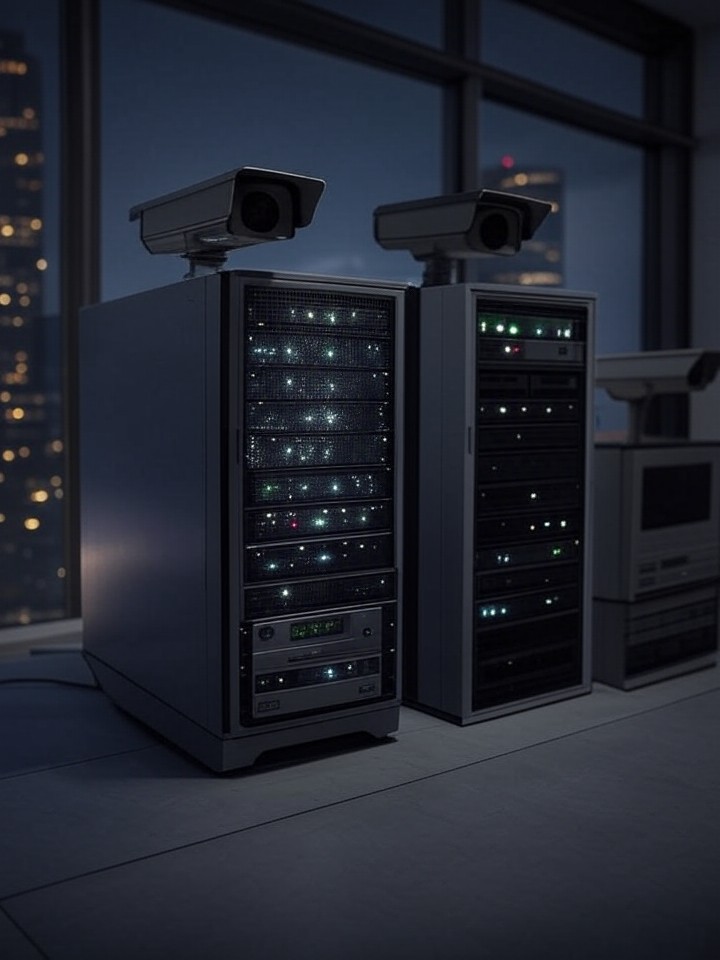
 Jowi Morales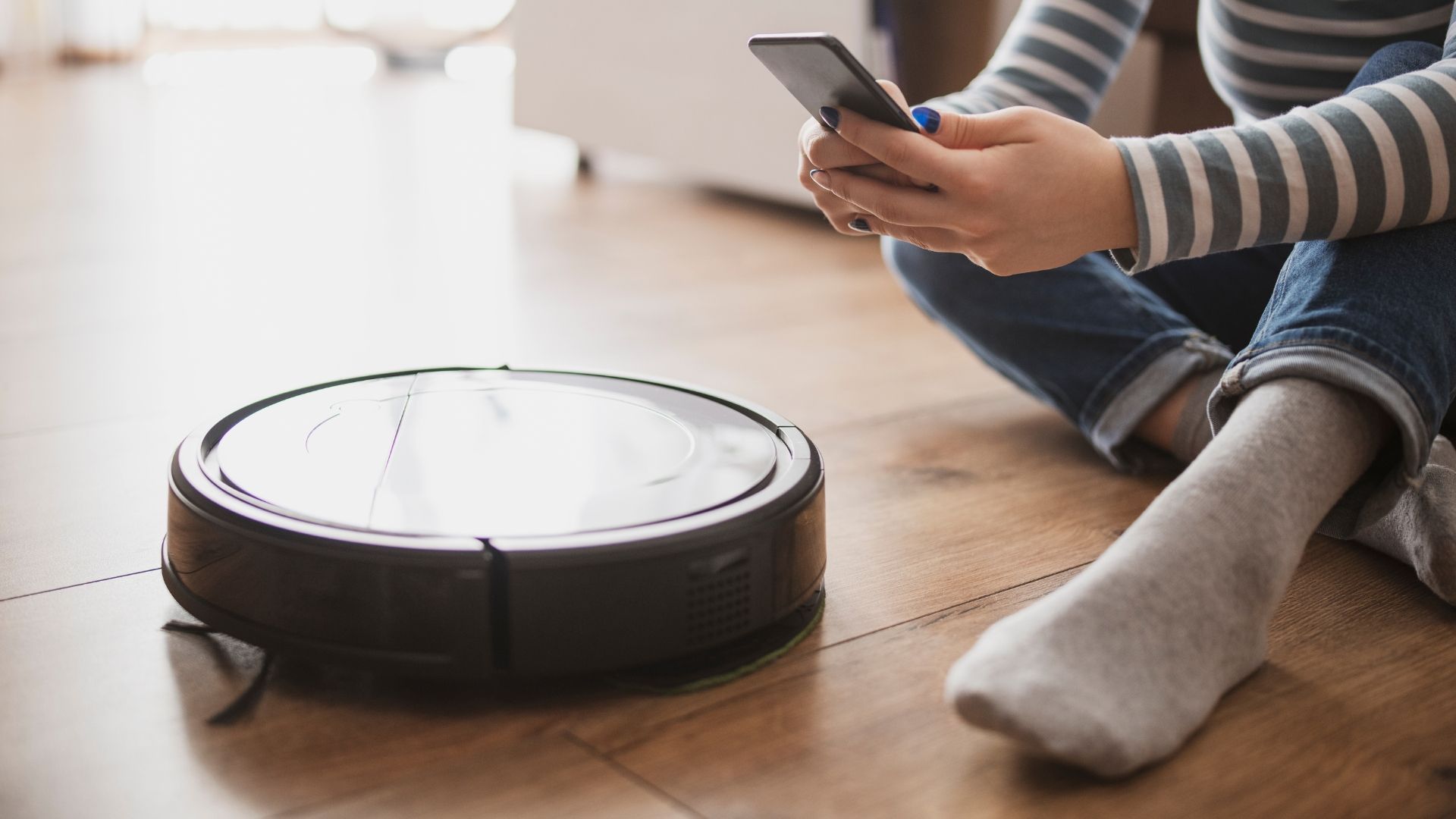


 Emma Roth